
lambs II
"Cain is 18 in the pasture field."

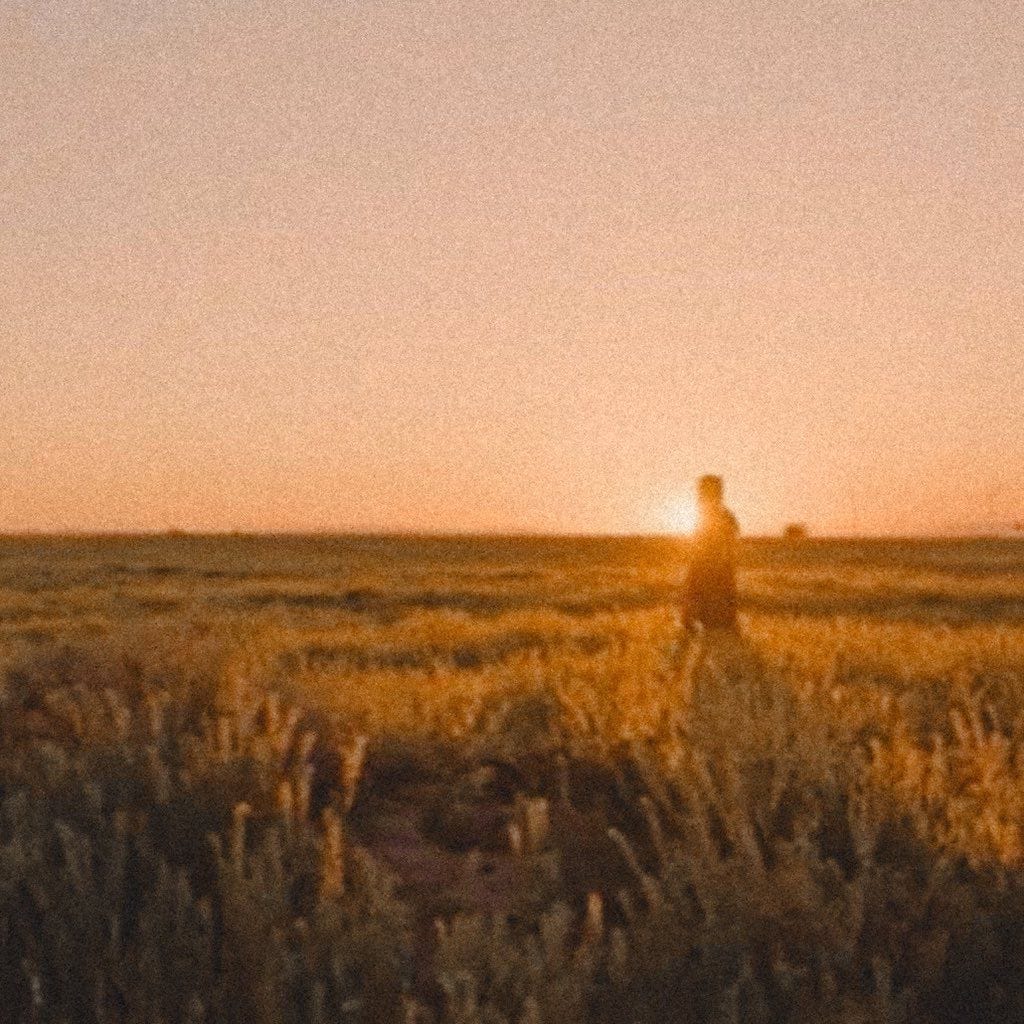
Cain is 18 in the pasture field, watching the sheep graze slowly, watching Abel count them over and over and over, touch each of their foreheads in turn, run his fingers through the wool on their backs, begin counting again. Cain turns his face up into the sun, forces his eyes open against the white light, comes away with vision speckled black, and counts the spots like his brother counts his sheep. Beside the pasture, Cain grows wheat and corn in long rows, tomatoes on low vines, strawberries in thick brambles, spots of red in between so much green. He tills long stretches of soil, counts each plant come ripe, sows seeds deep in the dirt, warms them with the palms of his hands before patting the earth flat. Cain makes wound after wound in the dirt, makes something grow from each one, makes himself turn away from Abel and the sheep, makes himself stop counting their white bodies, makes himself stop counting his brother as one of them. Ten sheep and one brother are not eleven lambs to slaughter unless you are this son, unless you are this sinner, unless you have this stone in your pocket. Cain digs the stone, the size of a fist, from his pocket and buries it in the dirt, stomps the dirt flat, sprinkles seeds over it, but his pocket is still heavy, but the sheep are still grazing, but Abel is still among them. In the next row, he buries the stone again; in the next row, he buries it a third time. In the pasture, he counts ten sheep and one brother. In the pasture, he counts eleven lambs for slaughter. Eleven lambs and only one stone. Cain stuffs his pockets full of strawberries, enough so that when he reaches into them, his hands come away sticky, sweet, red, enough so that he cannot find the stone under all of this fruit, enough so that he can offer one to his brother in the pasture, can watch him enjoy it, can tell him he grew it himself, can ask him if he is proud. “I’m always proud of you,” Abel promises. “Teach me how to grow like you do.” On Sundays, after church, they set two booths at the farmer’s market: Brother’s Bounty. Cain lines long tables with the crop he has harvested and Abel stocks long coolers with freshly butchered meat. That morning in the pasture, as they backed down the driveway in the cab seat of their father’s blue pickup truck, Cain counted 7 sheep and no brother, 3 lambs gone to slaughter. Abel wipes a stray spot of blood from his forearm with his handkerchief, tucks it back into his pocket, rolls down the window, leans his head into the wind while Cain drives. There is a tuft of still-white wool stuck to the sole of Abel’s shoe. There is a stone deep in Cain’s pocket. Cain stands alongside his strawberries and corn and watches Abel sell the meat of his flock in carefully tied bundles, wrapped lovingly in butcher’s paper, watches Abel pat each one twice in goodbye before passing it over the table to hungry hands. Cain wonders what it is to kill the thing you love, to make use of its flesh in this way, wonders how a sheep is different from a vine or a stalk or a row of seeds or a brother. Cain wonders if Abel thinks of his flock when he gnashed their meat between his teeth. He crushes a strawberry in his palm to feel what it is to have blood on his hands, to see if he can stand it. His palm is still sticky and red on the steering wheel on the drive home, on his brother’s shoulder in the kitchen when they tell their father how much they sold, on the bed sheets when he turns them down for the night, on his brother’s wrist when he pulls it towards himself in the middle of the dark, unable to sleep, jealous and angry and hurt in a way that is not angry, is more aching and sad. Cain pushes his stained palm against Abel’s while his brother sleeps, peels it back, watches his brother’s hand come back clean. Cain goes to slip back to bed, to press his palms into the white sheets and see how they stain, pauses to watch Abel, still sleeping. Cain wonders what it is he dreams about.
Little lambs in a boundless field. I can’t help but keep chasing after them.